Kubernetes and Docker Integration: The Foundation of Modern Container Orchestration
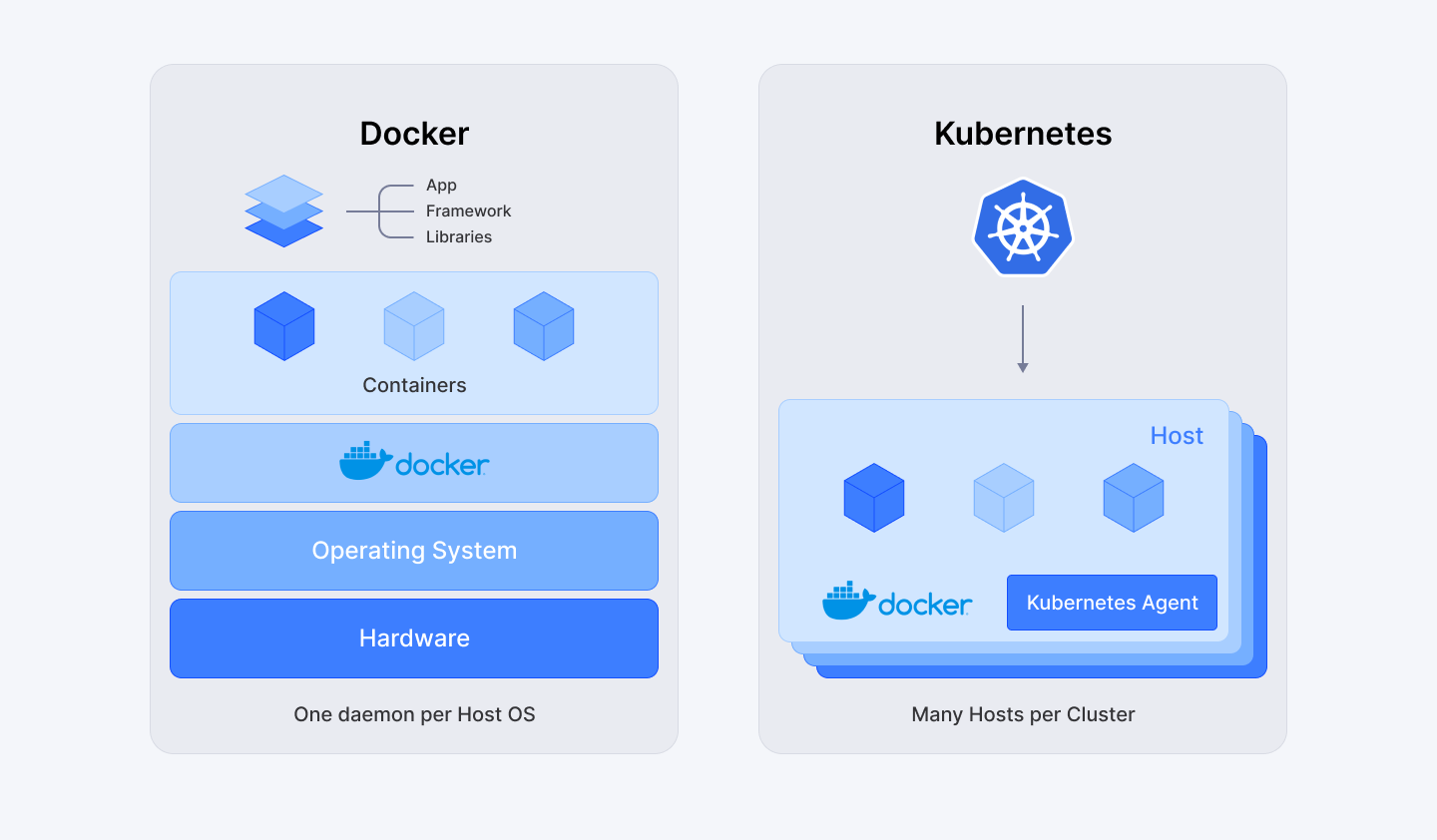
Container technology has transformed the way applications are built, deployed, and scaled. At the heart of this revolution lies the integration of Docker—the most popular containerization platform—and Kubernetes, the leading container orchestration system. Together, they form a powerful infrastructure for automating software deployment and managing distributed applications.
Understanding Docker and Kubernetes
1. Docker: The Container Engine
Docker packages applications into lightweight, portable containers. It ensures software runs consistently, regardless of the environment.
Core capabilities of Docker include:
- Container creation and management
- Image packaging
- Portable runtime execution
Docker streamlines development through isolation and reproducibility.
2. Kubernetes: The Orchestrator
Kubernetes automates container operations across clusters.
It handles:
- Deployment
- Scaling
- Load balancing
- Health monitoring
Kubernetes ensures distributed applications run efficiently and reliably.
Why Integration Matters
While Docker enables container creation, Kubernetes enables orchestration. Their integration allows organizations to fully manage modern application delivery pipelines.
The ecosystem has evolved to include container runtimes compatible with Kubernetes, yet Docker’s principles and image format remain deeply embedded.
How Kubernetes and Docker Work Together
Kubernetes uses container runtimes to execute workloads. Historically, Docker served as the runtime, while Kubernetes coordinated container placement and execution across nodes.
The integration is built on:
- Docker images stored in registries
- Kubernetes pulling and running these images
- Kubernetes monitoring container health and scaling needs
Even as container runtime architecture shifted to tools like containers, Docker remains integral for building and packaging containers.
Key Benefits of Kubernetes–Docker Integration
1. Standardized Packaging
Developers use Docker files to create reusable images.
Benefits include:
- Consistent builds
- High portability
- Version control capability
2. Automated Scaling and Resilience
Kubernetes ensures Docker containers:
- Restart when they fail
- Scale automatically based on demand
- Distribute across nodes for availability
3. Faster Development and Deployment
Teams adopt CI/CD workflows where:
- Docker builds images
- Kubernetes deploys them to clusters
- Updates roll out with zero downtime
Use Cases Enabled by the Integration
- Microservices architectures
- Cloud-native applications
- DevOps automation
- Edge computing deployments
- AI/ML workloads at scale
This combination allows highly dynamic workloads to be managed efficiently.
Challenges to Consider
While powerful, the integration also introduces complexity.
Common hurdles include:
- Learning curve for Kubernetes configuration
- Security considerations for image management
- Networking and monitoring complexity
- Teams must invest in tooling and expertise to maximize benefits.
Best Practices for Successful Integration
Organizations accelerate adoption by:
- Using container registries for image management
- Implementing role-based access control in clusters
- Automating deployment with Helm charts
- Using observability tools like Prometheus and Grafana
These practices improve reliability, governance, and performance.
The Future of Docker and Kubernetes Together
As cloud-native computing expands, Kubernetes continues to evolve as the orchestration standard, while Docker retains its role in building images and local testing. The pair remains foundational to modern DevOps pipelines, even as alternative runtimes and serverless models emerge.
Conclusion
The integration of Kubernetes and Docker is central to modern application development. Docker simplifies how software is packaged, while Kubernetes ensures applications are resilient, scalable, and automated. Together, they create an ecosystem powering cloud-native architectures across industries. As systems grow more distributed and container-driven, this partnership will continue to anchor innovation in software delivery.